You Won’t Believe What This Malaysian Gem Hides in Plain Sight
Malacca, Malaysia, isn’t just about colorful streets and colonial charm—its real magic lies in the land itself. Rolling riverbanks, ancient geology, and centuries-old waterways shape a terrain unlike anywhere else. I spent a week moving slowly through this UNESCO city, letting the landscape guide me. What I found wasn’t just history—it was a living, breathing environment that tells stories under your feet. From the soft silt beneath the Malacca River to the sun-warmed tiles of centuries-old shophouses, every surface carries memory. This is a place where geography and heritage are inseparable, where walking isn’t just transportation—it’s a form of listening. By slowing down, I discovered that the true soul of Malacca isn’t only in its museums or markets, but in the very ground we walk on.
The Rhythm of Slow Travel in a Historic City
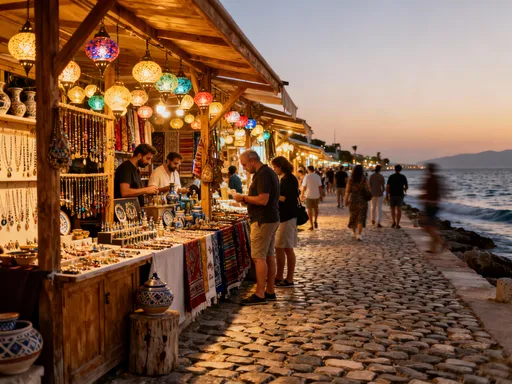
Malacca invites a different kind of journey—one defined not by checklists or photo ops, but by presence. The city’s compact layout, with its narrow lanes and intimate riverfronts, naturally encourages slow travel. Visitors who rush through risk missing the quiet moments that reveal its character: the early morning glow on weathered brick walls, the rhythmic tapping of a carpenter restoring a heritage window frame, or the scent of steamed rice cakes wafting from a roadside vendor just opening for the day. Moving slowly allows space for these sensory details to accumulate, forming a deeper connection to the place.
During my stay, I committed to exploring on foot, avoiding motorized transport as much as possible. This simple choice transformed my experience. Without the rush of a tour bus or the distraction of navigation apps, I began to notice patterns—the way shadows shifted across the red-tiled roofs of Jonker Street by mid-morning, or how the river’s surface changed with the tides. I learned to follow the pace of local life: waking early to beat the heat, resting during peak afternoon hours, and returning to the streets as the golden light softened in the late afternoon. This rhythm, rooted in generations of tropical living, is part of Malacca’s enduring charm.
Slow travel also fosters meaningful interactions. One morning, while pausing near a quiet stretch of the Malacca River, I struck up a conversation with an elderly artisan sanding a wooden panel for a traditional Peranakan cabinet. He spoke little English, but through gestures and smiles, he shared the history of his craft, passed down through his family for over a century. These unplanned exchanges—possible only when time is allowed to unfold—are the true rewards of unhurried exploration. They remind us that travel is not just about seeing new places, but about being open to the people and stories that inhabit them.
Moreover, moving slowly reduces environmental impact. Walking produces no emissions, causes minimal disturbance to local communities, and keeps tourism dollars circulating within the neighborhood economy. When travelers linger in small cafés, buy from street vendors, or hire local guides for personalized walks, they support sustainable livelihoods. In a city like Malacca, where heritage preservation and community well-being are closely linked, choosing to travel slowly becomes an ethical decision as much as a personal one.
Malacca’s Unique Terrain: Where Land, Water, and History Meet
The story of Malacca begins with its geography. Situated on the southwestern coast of Peninsular Malaysia, the city occupies a low-lying coastal plain shaped by sediment deposits from the Malacca River and centuries of tidal influence. This flat, fertile terrain, composed largely of alluvial silt and soft clay, made it ideal for early settlement and port development. Unlike mountainous or heavily forested regions, Malacca’s open landscape allowed for easy access to the sea while providing enough elevation to avoid constant flooding—a rare balance that contributed to its rise as a major trading hub in the 15th century.
Historically, the city’s position along the Strait of Malacca—one of the world’s busiest maritime passages—gave it strategic importance. Ships traveling between China, India, and the Middle East relied on its sheltered harbor and fresh water supply. The river, which flows gently through the city center before emptying into the strait, served as both a transportation route and a natural defense. Over time, human activity reshaped the terrain: land was reclaimed from the sea, mangrove swamps were drained, and canals were constructed to improve navigation. These modifications, while altering the natural landscape, also reflect a long-standing relationship between people and environment.
Today, remnants of this dynamic interplay remain visible. The city’s historic core lies just above sea level, making it vulnerable to tidal surges and heavy rainfall. To manage this, early engineers built raised foundations for buildings and designed drainage systems that follow the river’s natural slope. Some streets still bear the marks of old water channels, now paved over but detectable through subtle changes in elevation. Even modern infrastructure, such as floodgates and retention ponds, continues this legacy of adaptation. Understanding Malacca’s terrain is essential to appreciating how its people have lived in harmony with, and sometimes in resistance to, the forces of nature.
The terrain also influences urban planning and daily life. Because the soil is soft and prone to shifting, large-scale construction requires careful engineering. Many older buildings rest on deep wooden pilings driven into the ground, a technique used for centuries to stabilize structures in wet conditions. These foundations, though hidden, are a testament to the ingenuity required to build on such land. At the same time, the flatness of the city makes it highly walkable and bicycle-friendly—qualities that enhance the visitor experience while reducing reliance on cars.
Walking the River: A Journey Through Layers of Time
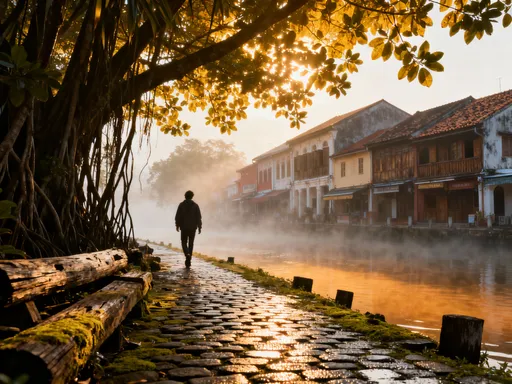
The Malacca River is the city’s quiet heartbeat. Stretching approximately nine kilometers from its source in the outskirts to its mouth at the Strait of Malacca, it flows with a gentle persistence that belies its historical significance. I chose to walk its entire length over two days, beginning in the quieter upstream neighborhoods where the water runs clear and bordered by patches of reeds and low-hanging trees. Here, the river feels almost rural, a contrast to the bustling core it eventually reaches.
As I moved downstream, the character of the river changed. The banks became more structured—first with simple wooden railings, then with concrete embankments lined with colorful murals. The water, once transparent enough to see small fish darting between stones, grew darker and slower, reflecting the increasing human presence. Along the way, I passed clusters of houseboats, some used as homes, others converted into floating cafés. Their moorings creaked gently with the tide, a sound that blended with the distant hum of city life.
What struck me most was how the river’s topography shaped daily routines. In certain areas, especially near the historic district, the riverbank rises slightly above street level, creating natural terraces where vendors set up their stalls. These elevated spots stay dry during high tide and offer better visibility to passing tourists. Conversely, lower sections require regular maintenance—local workers clear debris after storms and repair wooden walkways worn down by constant moisture. The rhythm of life here is dictated not by clocks, but by the ebb and flow of water.
The river’s gradient is barely perceptible, yet it plays a crucial role in drainage and navigation. Engineers have long relied on this subtle slope to guide wastewater away from residential areas and into treatment zones downstream. During my walk, I noticed small sluice gates at intervals, used to control water levels during monsoon season. These quiet interventions, though unobtrusive, are vital to preventing flooding in the old town. Walking the river, I realized that every curve, every change in texture or elevation, tells a story of careful stewardship—a collaboration between nature and human design spanning generations.
Hidden Elevations: Rooftops, Bridges, and Raised Pathways
Though Malacca is predominantly flat, it is far from featureless. Subtle changes in elevation—often overlooked by hurried visitors—offer rewarding perspectives. One of the most striking vantage points is the Taming Sari Tower, a rotating observation tower in the city center. From its glass cabin, I ascended 110 meters, watching as the mosaic of red-tiled roofs, winding alleys, and the serpentine river unfolded beneath me. At that height, the city’s layout became clear: a dense urban core surrounded by green belts and water bodies that serve as natural buffers against urban sprawl.
Yet some of the most meaningful views come from much lower heights. Heritage shophouses along Heeren Street and Jonker Walk often have accessible rooftops, either through narrow staircases or open courtyards. Climbing to one such rooftop at dawn, I watched the city awaken—steam rising from breakfast stalls, laundry fluttering on lines, and the first boats gliding along the river. These rooftops, once used for drying goods or social gatherings, now provide intimate panoramas of daily life. They also reveal architectural details invisible from street level: intricate ceramic tiles, ventilation patterns in the eaves, and the way buildings are aligned to catch breezes.
Pedestrian bridges, too, offer elevated insights. The iconic Harmony Bridge, connecting the east and west banks of the river, allows walkers to pause mid-span and observe the water’s movement. From this height, I could see how the river narrows slightly at certain points, creating gentle currents that affect boat navigation. Other footbridges, less photographed but equally useful, link residential neighborhoods and provide shortcuts for locals. Their raised platforms protect users during high tides and heavy rains, demonstrating how infrastructure is adapted to environmental conditions.
These slight elevations are not merely scenic—they reflect centuries of practical urban planning. Raised foundations, elevated walkways, and flood-resistant building designs all stem from the need to coexist with a dynamic, water-rich environment. By seeking out these vantage points, travelers gain a deeper appreciation for how Malacca’s people have turned geographical challenges into architectural and cultural strengths.
The Ground Beneath: Colonial Tiles, Cobblestones, and Mangrove Roots
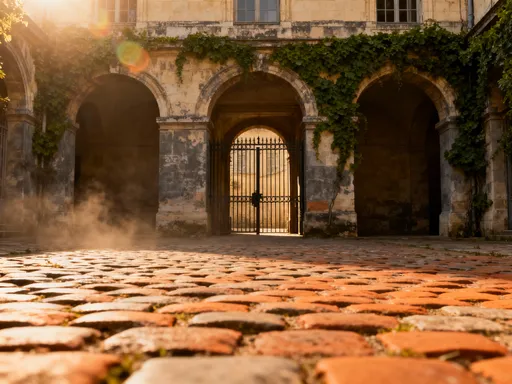
Walking through Malacca is as much a tactile experience as a visual one. The surfaces beneath your feet tell stories of adaptation, trade, and resilience. In the historic district, Dutch-era cobblestone streets—laid with rounded stones brought as ship ballast from Europe—create a distinctive crunch underfoot. These stones, uneven and worn smooth by centuries of use, are not just nostalgic relics; they allow rainwater to seep through, reducing surface runoff and preventing erosion.
Equally evocative are the clay tiles that cover countless rooftops. Made from local red soil and fired in traditional kilns, these tiles absorb heat during the day and release it slowly at night, helping regulate indoor temperatures. Their deep orange hue has become synonymous with Malacca’s aesthetic, appearing in paintings, postcards, and even modern souvenirs. Stepping into a restored shophouse, I ran my hand along a wall lined with these tiles, feeling their textured surface and imagining the generations who have lived beneath them.
Outside the tourist zones, the terrain shifts again. Wooden boardwalks stretch across wetlands and mangrove forests, their planks weathered by sun and salt. Walking on these paths, I noticed how they are elevated just enough to avoid tidal flooding, yet low enough to allow roots and aquatic plants to thrive beneath. Along the edges, exposed mangrove roots formed a tangled network—nature’s own flood defense system. These roots stabilize the soil, filter pollutants, and provide habitat for fish and birds, making them vital to the ecosystem.
Each surface in Malacca—whether stone, wood, tile, or soil—reflects a choice shaped by environment and necessity. The Portuguese Fort walls are built from quarried granite, resistant to cannon fire and coastal erosion. Riverbank reinforcements use a mix of concrete and natural stone, blending durability with aesthetic continuity. Even the paint on building facades is formulated to withstand humidity and UV exposure. These details, often unnoticed, are testaments to a culture of adaptation that has allowed Malacca to endure for over 600 years.
Beyond the Old Town: Nature’s Edge in Suburban Malacca
To fully appreciate Malacca’s terrain, one must venture beyond the UNESCO-listed core. The city’s outskirts reveal a different landscape—one of rolling hills, forest reserves, and freshwater reservoirs. Ayer Keroh, located about 15 kilometers northeast of the center, is a prime example. Once a rubber plantation, it now hosts a botanical garden, a crocodile farm, and a series of walking trails through secondary rainforest. Here, the elevation rises noticeably, offering cooler temperatures and panoramic views of the surrounding countryside.
The Ayer Keroh Lake and its surrounding wetlands serve as a crucial water catchment area, supplying part of the city’s freshwater needs. Boardwalks wind through the marshland, allowing visitors to observe herons, kingfishers, and monitor lizards without disturbing the habitat. Interpretive signs explain the role of peat soils and native vegetation in water filtration and flood prevention. This area, though less famous than the old town, plays a vital role in maintaining ecological balance.
Further south, along the coastline near Klebang and Tanjung Kling, the terrain transitions into coastal dunes and casuarina forests. These areas act as natural barriers against storm surges and coastal erosion. Unlike developed beaches in other parts of Malaysia, these shores remain relatively untouched, with no large resorts or commercial infrastructure. Local conservation groups organize clean-up events and mangrove planting initiatives, inviting residents and visitors to participate in preservation efforts.
These suburban and rural zones offer a necessary counterpoint to the urban intensity of the historic center. They remind us that Malacca is not just a museum of the past, but a living region where nature and human activity continue to shape one another. For travelers seeking quiet reflection or outdoor recreation, these areas provide accessible escapes without requiring long journeys. A morning hike in Ayer Keroh or an afternoon picnic by the reservoir can restore a sense of balance, grounding the mind after days of cultural immersion.
Traveling with Respect: Preserving Malacca’s Fragile Landscape
As Malacca’s popularity grows, so does the pressure on its delicate ecosystems. Increased foot traffic, improper waste disposal, and unregulated development threaten both its natural and cultural heritage. The very features that make the city enchanting—its narrow lanes, soft riverbanks, and sensitive wetlands—are also its most vulnerable. Sustainable travel is no longer optional; it is essential to ensuring that future generations can experience Malacca as it is today.
One of the simplest ways to travel responsibly is to stay on marked paths. In mangrove areas and forest trails, stepping off designated boardwalks can damage root systems and compact soil, disrupting plant growth and increasing erosion. Similarly, in the old town, avoiding shortcuts through private courtyards or heritage buildings helps preserve their structural integrity. Respecting signage and local guidelines may seem minor, but collectively, these actions make a significant difference.
Supporting eco-conscious businesses is another powerful choice. Some tour operators in Malacca now offer low-impact walking tours led by trained local guides who emphasize environmental awareness. Others have introduced river cruises using electric boats, reducing noise and water pollution. Choosing these options supports a tourism model that values preservation over profit. Additionally, opting for reusable water bottles, refusing single-use plastics, and properly disposing of waste help reduce the city’s environmental footprint.
Education also plays a role. Many visitors are unaware of how their behavior affects the terrain. For instance, feeding wildlife—though well-intentioned—can alter natural feeding patterns and lead to dependency. Lighting fires or smoking in dry forest areas poses fire risks, especially during hot months. By learning about local ecosystems and regulations, travelers can make informed decisions that align with conservation goals.
Ultimately, respecting Malacca’s landscape means recognizing that we are guests in a place shaped by centuries of care. The cobblestones, the river, the mangroves—they are not backdrops for photographs, but living systems that require protection. When we travel slowly, mindfully, and with gratitude, we honor the resilience of this remarkable city.
Malacca’s terrain is not just a setting—it’s a silent narrator of centuries of change. By slowing down, we don’t just see the city; we feel it beneath our feet, in the tilt of a tile, the flow of the river, the whisper of mangrove leaves. This is travel with depth, where every step becomes a conversation with the earth itself. Let the land guide you—and you’ll leave changed.