Lost in Tahiti’s Wild Beauty: What I Didn’t Expect
Tahiti is more than a tropical postcard—it’s a living, breathing world of emerald peaks, turquoise lagoons, and culture that pulses with authenticity. I went searching for scenic spots but found something deeper: raw nature, quiet coves, and moments that stole my breath. This isn’t just a trip report—it’s a real journey through the island’s soul, where every turn reveals something unforgettable. The scent of frangipani on the breeze, the distant beat of traditional drums, the way light dances on water at dawn—these are the quiet revelations that define Tahiti beyond its glossy brochures. What I discovered was not perfection, but presence: a place that invites you not just to see, but to feel.
First Impressions: Beyond the Airport Hype
Stepping off the plane at Faa’a International Airport, the first wave of Tahiti hits not with grandeur, but with a humid, floral embrace. The air is thick with the scent of gardenias and damp earth, a far cry from the air-conditioned stillness of travel hubs back home. Many arrive with visions of overwater bungalows and sunset cocktails, but the island’s true essence begins well before check-in at any resort. The real Tahiti reveals itself along the winding coastal road of Tahiti Nui, where banana trees lean over coral stone walls and children wave from roadside stands selling coconuts and fresh bread.
The contrast between expectation and reality becomes clear almost immediately. While glossy travel magazines spotlight polished beaches and infinity pools, the island’s heartbeat thrives in its villages—places like Papeete, where the market hums with color and commerce, and the inland hamlets where elders sit beneath mango trees, speaking in soft, melodic Tahitian. These are not staged experiences; they are daily rhythms, unaltered for outsiders. The island does not perform—it simply is.
What sets Tahiti apart is its refusal to conform to tourist templates. There are no artificial attractions or fabricated cultural shows for mass consumption. Instead, authenticity is woven into the landscape: in the hand-painted signs at fruit stands, in the way fishermen mend nets at dusk, in the quiet pride of locals who welcome visitors without surrendering their way of life. To experience this requires patience, openness, and a willingness to slow down. The island rewards those who wander beyond the airport shuttle routes, who take the back roads, who stop to ask, ‘What’s your name?’ and ‘How are you today?’ in broken but sincere Tahitian.
This grounded reality is not less beautiful than the fantasy—it is more meaningful. The glossy postcard image of Tahiti is real, but it is only a fragment. The full picture includes muddy trails after rain, the occasional power outage in remote areas, and the need to plan ahead for supplies. Yet these ‘imperfections’ are not flaws; they are markers of a place that remains true to itself. Travelers who embrace this discover that the island’s magic lies not in flawless presentation, but in its living, breathing authenticity.
The Heart of the Island: Exploring the Papenoo Valley
Just a short drive from the capital, the Papenoo Valley unfolds like a secret whispered by the mountains. Nestled on the rugged north shore of Tahiti Nui, this lush corridor is carved by time and water, its cliffs draped in ferns and wild orchids. Few tourists venture this far, deterred by the winding roads and lack of signage, but those who do are met with a landscape that feels untouched, almost sacred. The valley is not just a scenic detour—it is the island’s green heart, where nature and tradition intertwine in quiet harmony.
The highlight for many is the hike to Cascade Blanche, a towering waterfall that plunges into a jade-green pool below. The trail begins modestly, following an old plantation path through dense jungle. As the path narrows, the air cools, and the sound of rushing water grows louder. The final descent requires care—slippery rocks and tangled roots demand attention—but the reward is worth every cautious step. The pool at the base of the falls is a natural sanctuary, surrounded by moss-covered boulders and the constant mist of falling water. Swimming here feels like stepping into another world, one where time slows and the only rhythm is the pulse of the land itself.
What makes the Papenoo Valley more than just a hiking destination is its cultural depth. The valley was once home to ancient Polynesian communities, and remnants of their presence can still be found—stone platforms that once supported homes, petroglyphs etched into volcanic rock, and sacred sites known only to locals. Some of these places are protected, and access is restricted out of respect. This is not exclusion, but preservation. The valley is not a museum; it is a living landscape, and its stories are passed down through generations, not packaged for tourists.
For visitors, the best way to honor this heritage is to travel with awareness. Hiring a local guide not only ensures safety on the trail but also provides context—stories of ancestral guardians, explanations of plant uses, and insights into the spiritual significance of certain sites. Guides often share knowledge that would otherwise remain invisible: which plants are used in traditional medicine, how the valley was farmed before colonization, and why certain areas are considered tapu, or sacred. This deeper understanding transforms a simple hike into a meaningful exchange.
Practical considerations matter too. The trail can be slippery after rain, so water shoes with good grip are essential. Sunscreen and insect repellent should be reef-safe, as runoff eventually reaches the ocean. And while the valley offers solitude, it is not a place to rush. The journey is as important as the destination. Sitting by the pool, listening to the water, feeling the cool spray on your skin—these are the moments that stay with you long after the hike ends.
Overwater Magic: More Than Just Bungalows
When most people think of Tahiti, they picture overwater bungalows—elegant villas perched above crystal-clear lagoons, their stilts dipping into turquoise water. And yes, these accommodations are stunning. But the real wonder lies beneath the surface, in the vibrant coral gardens that flourish just offshore. Around motus like Motu Tape and Motu Piti Aau, the lagoon becomes a living aquarium, teeming with life in every shade of the rainbow. Parrotfish nibble at coral, clownfish dart through anemones, and eagle rays glide silently over the sandy bottom, their wings rippling like silk.
Snorkeling in these waters is not just a recreational activity—it is an invitation to witness a delicate ecosystem in motion. Visibility can exceed 100 feet on calm days, especially in the early morning when the sun cuts cleanly through the water. The coral itself is a mosaic of shapes and textures: brain coral, staghorn, plate coral, each hosting its own community of marine life. This biodiversity is not accidental; it is the result of careful stewardship. Local conservation groups monitor coral health, track fish populations, and work to prevent overfishing and pollution.
Travelers can support these efforts by choosing eco-conscious tour operators. Some companies partner with marine biologists to offer educational snorkel tours, where guides explain the role of each species and the threats facing the reef. Others limit group sizes to minimize impact and provide reef-safe sunscreen to guests. These small choices make a difference. When tourism is done responsibly, it becomes a force for protection rather than degradation.
The lagoon is not just an ecological treasure—it is a cultural one as well. For generations, Tahitians have relied on the sea for food, transportation, and spiritual connection. Fishing is more than a livelihood; it is a practice steeped in tradition, with knowledge passed from father to son, mother to daughter. Certain areas of the lagoon are managed under traditional rahui systems, where fishing is temporarily prohibited to allow stocks to recover. This ancient form of conservation reflects a deep understanding of balance—a lesson modern visitors would do well to remember.
For those staying in overwater bungalows, the experience is enriched by this awareness. Waking to the sound of waves beneath your floor, stepping onto the deck to watch a school of fish dart past—these moments take on new meaning when you understand what lies beneath. The bungalow is not just a luxury; it is a vantage point, a bridge between comfort and wildness. And when you slip into the water with a mask and snorkel, you are not just observing nature—you are entering it.
Climbing the Backbone: The Road to Teahupo’o
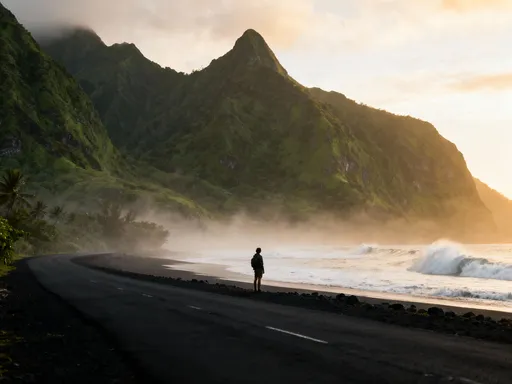
The southern coast of Tahiti Nui is a study in raw, volcanic power. As the road winds south from Papeete, the landscape shifts—mountains rise like broken teeth, waves crash against black rock, and the air carries the salty tang of open ocean. This is the backbone of the island, where the Pacific asserts its dominance. The journey to Teahupo’o, world-famous for its massive surf breaks, is not just a destination but an experience in itself. The drive offers panoramic views of coves carved by centuries of erosion, small farms clinging to steep slopes, and fishing canoes pulled onto lava-strewn beaches.
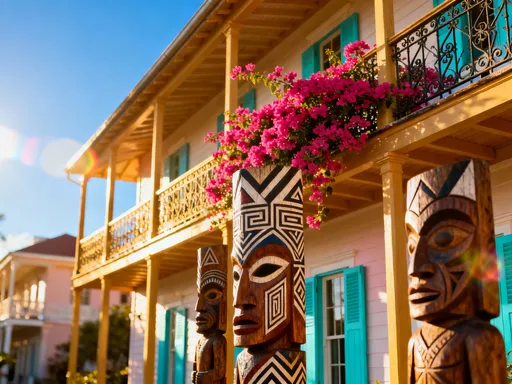
Teahupo’o is best known for its waves—some of the heaviest and most powerful in the world. Every year, elite surfers gather here for competitions, drawing global attention. But for those who come not to ride but to observe, the area offers quieter rewards. Scenic lookouts provide sweeping views of the reef pass where the waves form, and on calm days, the water transforms into a glassy expanse perfect for kayaking or stand-up paddleboarding. The village itself is small, with a handful of homes, a church, and a few craft stands selling hand-carved wooden tikis and woven hats.
What stands out is the sense of place. This is not a commercialized surf town; it is a community rooted in tradition. Locals move at their own pace, tending gardens, repairing boats, and greeting visitors with quiet dignity. Respect is paramount. Visitors are welcome to view the surf from designated areas, but trespassing on private land or disturbing sacred sites is not tolerated. Signs in Tahitian and French remind guests to stay on marked paths—a small request that reflects a larger principle: this land is not a playground, but a home.
Weather plays a crucial role in travel plans. The southern coast is exposed, and storms can roll in quickly. After heavy rain, roads may become slick or partially blocked by falling rocks. Travelers are advised to check conditions before departure and to carry water, snacks, and a basic emergency kit. But even with these precautions, the journey is worth it. There is a majesty here—a sense of standing at the edge of something ancient and untamed. The roar of the ocean, the smell of wet rock, the way the light shifts with the clouds—these are the sensations that define the true Tahiti.
Hidden Culture: Villages and Markets Off the Beaten Path
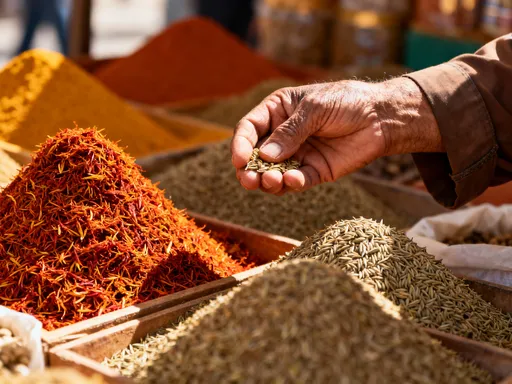
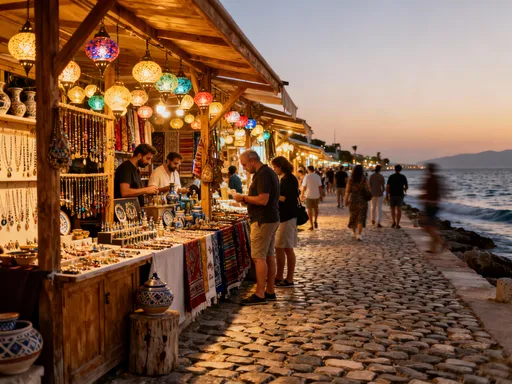
A few miles inland from the coast, life unfolds without fanfare. In villages like Papeari and Afaahiti, mornings begin with the clatter of market stalls being set up, the rustle of banana leaves, and the scent of grilled fish and fresh fruit. These are not tourist markets; they are community hubs where families gather to buy, sell, and socialize. Stalls overflow with island-grown papayas, pineapples, and breadfruit, alongside handcrafted items—woven baskets, shell necklaces, and carved wooden figures. This is where culture lives not as performance, but as practice.
Engaging respectfully is key. A simple ‘Ia orana’ (hello) goes a long way. Smiling, making eye contact, and asking permission before taking photos shows that you are not just passing through, but paying attention. Many vendors appreciate genuine interest. They may offer a sample of poisson cru, the national dish of raw fish marinated in coconut milk and lime, or explain how a tiki pendant is carved from local wood. These small exchanges are the essence of tama’ara’a—the Polynesian spirit of hospitality that values connection over transaction.
One morning, while visiting a market in Afaahiti, I stumbled upon a dance rehearsal in a community hall. Young girls in grass skirts practiced traditional movements under the guidance of an elder. The drums were simple—wood and sharkskin—but the rhythm was powerful, echoing stories of ancestors and the sea. I was invited to watch from the back, not as a spectator, but as a guest. No tickets, no schedule, no performance for profit—just culture shared because it matters.
Supporting these communities through small purchases has real impact. Buying a hand-carved spoon or a woven mat means more than owning a souvenir; it sustains a family, preserves a craft, and honors a tradition. These items cannot be found in airport shops, and that is precisely their value. They carry the imprint of the maker, the story of the material, the weight of continuity. In a world of mass production, such objects are rare and precious.
Sailing the Lagoon: A Day on the Water
One of the most transformative ways to experience Tahiti is from the water. Chartering a small sailboat or joining a local crew for a full-day tour offers a perspective no roadside stop can match. Our journey began at dawn, slipping out of Papeete Harbor as the city stirred to life. The captain, a third-generation sailor, navigated with quiet confidence, his hands moving over the wheel as if in conversation with the sea.
We sailed along the peninsula, passing secluded motus—tiny islands of sand and palm trees that rise like jewels from the lagoon. At each stop, we dropped anchor in calm water and slipped into the sea. Snorkeling in these quiet passes, far from the resort zones, felt like discovering a private world. Coral gardens flourished in the shallows, and schools of fish moved in synchronized waves. On one motu, we found a single bench beneath a coconut tree, left there by someone who clearly valued solitude. We ate a simple lunch—bread, fruit, and cold coconut water—sitting in the shade, listening to the wind.
Safety is essential on such trips. The captain emphasized staying hydrated, wearing reef-safe sunscreen, and never snorkeling alone. Group sizes were kept small—no more than eight—to minimize environmental impact and ensure personal attention. Children were welcome, but only if accompanied by adults who could swim confidently. These guidelines were not restrictions, but part of the experience: a reminder that the lagoon is not ours to dominate, but to respect.
What made the day unforgettable was its slowness. There was no rushing from one site to the next, no pressure to capture the perfect photo. We moved with the tide, rested when the sun was high, and let the rhythm of the water guide us. This kind of travel—unhurried, intentional, connected—creates memories that linger long after the tan fades.
Why Tahiti Stays With You: The Afterglow of Real Exploration
Tahiti does not leave you unchanged. Its impact is not measured in souvenirs or selfies, but in the quiet shifts within. It is in the way you notice the scent of rain on hot earth back home, or how you pause to listen to birdsong in your garden. The island imprints itself not through spectacle, but through stillness—in the memory of a village drumbeat at dusk, the taste of fresh coconut, the silence of a hidden valley.
What endures is the lesson of depth over convenience. Tahiti resists the urge to be easily consumed. It asks for presence, patience, and humility. It rewards those who look beyond the postcard, who take the back road, who sit and listen. In doing so, it offers not just escape, but connection—to nature, to culture, to something deeper within ourselves.
Travel, at its best, is not about checking destinations off a list. It is about allowing places to change us. Tahiti does this not with grand gestures, but with quiet truths. Its beauty is not in perfection, but in its wild, untamed heart. And for those willing to wander beyond the obvious, it offers a journey that lingers long after the plane takes off—a whisper on the wind, a memory in the blood, a reminder that the world is still vast, still beautiful, still alive.