How I Saved for a Car Without Killing My Wallet—And Why Diversifying Worked
So, you want to buy a car but don’t want to drain your savings or drown in debt? I’ve been there. A few years ago, I thought saving meant stuffing cash into one account and waiting forever. Then I hit a wall. That’s when I discovered asset diversification—not just for rich investors, but for regular people like us. This isn’t about get-rich-quick schemes; it’s about smart, steady moves that protect your money while growing it. Let me walk you through how I restructured my savings and finally bought the car—without stress. It wasn’t magic. It was method. And it started with realizing that the way most of us save is quietly working against us.
The Car Fund Trap Most People Fall Into
Most families approach big purchases like buying a car the same way: open a savings account, set a goal—say, $12,000—and start transferring $300 a month. On paper, it’s disciplined. In reality, it’s fragile. The problem isn’t the effort; it’s the structure. When all your car money sits in a single savings bucket, you’re vulnerable in ways that aren’t obvious until something goes wrong. Imagine you’ve saved $8,000 over two years, only to face a surprise medical bill or a broken furnace. What happens to your car fund? For most, it’s raided. And once that boundary is crossed, rebuilding momentum feels impossible.
Beyond emergencies, there’s the slow erosion of value. A traditional savings account might offer less than 0.5% annual interest, while inflation runs closer to 3% over time. That means your saved dollars are actually losing purchasing power every year. What felt like progress becomes a quiet loss. You’re not failing because you’re bad with money—you’re failing because your strategy lacks resilience. Psychology plays a role too. When growth is invisible and rewards are years away, motivation fades. The dream of a reliable car starts to feel like a distant fantasy, not a realistic goal.
Another hidden trap is rigidity. Life changes—job shifts, family needs, moving homes—and a one-size-fits-all savings plan doesn’t adapt. You might get a bonus and want to accelerate your timeline, but with all your money locked in low-yield accounts, you can’t take advantage of better opportunities. Or worse, you panic during market dips and pull everything out, even if you’re not investing at all. The truth is, saving for a car shouldn’t feel like walking a tightrope. It should feel like building something solid, step by step, with room to adjust. That’s where a smarter strategy comes in.
What Asset Diversification Really Means (And Why It’s Not Just for Wall Street)
When you hear “diversification,” you might picture stock traders juggling tech shares and oil futures. But for everyday savers, diversification doesn’t mean high-risk bets. It means spreading your money across different types of safe, accessible tools so you’re not relying on just one. Think of it like packing your groceries: you wouldn’t carry ten fragile items in a single plastic bag. If one handle breaks, everything shatters. Instead, you’d use multiple bags, balancing weight and risk. Your car fund should work the same way—distributed across different “containers” that serve different purposes.
At its core, asset diversification is about managing trade-offs: growth versus safety, access versus returns, time versus flexibility. For a medium-term goal like buying a car in two to four years, you don’t need stock market exposure, but you also shouldn’t ignore modest growth opportunities. The goal isn’t to double your money; it’s to preserve it while giving it a slight boost. This can be done through a mix of insured savings vehicles, short-term bonds, and low-volatility interest-bearing accounts. Each plays a role in creating a balanced system that protects against loss while keeping up with rising costs.
For example, keeping 40% of your fund in a high-yield savings account gives you safety and liquidity. Another 40% might go into short-term certificates of deposit (CDs) or Treasury bills, which offer slightly higher returns with minimal risk. The final 20% could be placed in a money market fund, which behaves like a savings account but often pays more. None of these require market timing or complex decisions. They’re accessible through most credit unions and banks, and they’re protected by FDIC or NCUA insurance up to legal limits. Diversification, in this context, is not about speculation—it’s about strategy. It’s choosing stability with intention, not fear.
Why Your Car Fund Needs Growth—and Protection—At the Same Time
Many people treat car savings like emergency funds: just keep it safe. But there’s a crucial difference. Emergency funds are meant to sit untouched, protecting against shocks. Car funds, on the other hand, have a timeline and a purpose. They’re meant to grow—just enough—to meet a future price tag. And prices don’t stay still. Over three years, the cost of a modest used car can rise by 10% or more due to inflation, supply shifts, and demand. If your savings earn nothing, you’re effectively falling behind before you even start.
Think of your car fund as having two jobs: one is to protect your principal—the money you’ve worked hard to save. The other is to act like a slow engine, gently pushing forward so inflation doesn’t push you backward. Putting everything into a zero-interest checking account might feel safe, but it’s actually risky in the long run. It’s like parking your car on a hill with the emergency brake off. Nothing bad happens today, but over time, it could roll into trouble. The goal isn’t aggressive growth—it’s preservation with progress.
This dual need means your strategy must balance tools that offer safety with those that offer modest returns. A high-yield savings account might pay 4% annually, far above traditional banks. A six-month CD might offer 4.5%, locking your money for a short period but giving you a small premium. These aren’t get-rich-quick numbers, but they make a real difference. On a $10,000 fund, earning 4% instead of 0.5% means an extra $350 per year—enough to cover registration, insurance, or even a down payment boost. Over two years, that’s $700 you didn’t have to earn from your paycheck.
The key is matching the tool to your timeline. If you’re buying in under a year, safety and access matter most. If you’re three years out, you can afford to lock some funds for slightly better returns. Diversification allows you to do both at once—keeping part of your money liquid while letting another part work harder. This isn’t about chasing high yields; it’s about making your money work as smart as you do.
Building Your 3-Pot System: A Practical Framework for Car Savings
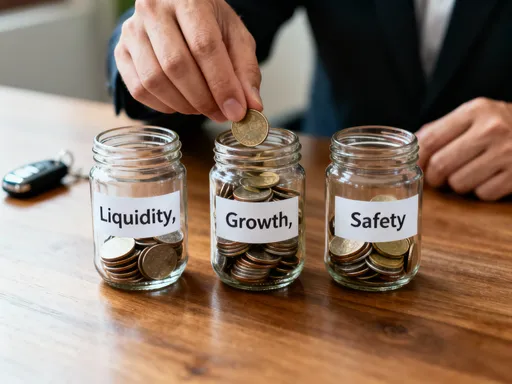
After years of false starts, I finally made progress when I stopped thinking of my car fund as one pile and started using a three-part system: the Liquidity Pot, the Growth Pot, and the Safety Net Pot. Each serves a clear purpose, and together, they create a flexible, resilient plan. The Liquidity Pot holds money you might need within the next six months—easy to access, fully safe. The Growth Pot holds funds you won’t need immediately, placed in slightly higher-yielding accounts. The Safety Net Pot is separate—it’s not part of the car fund at all, but a small emergency buffer that prevents you from dipping into car savings when life throws a curveball.
Here’s how it works in practice. Let’s say you’re saving $300 a month toward a $12,000 car, aiming to buy in three years. You allocate $150 to the Liquidity Pot—kept in a high-yield savings account with instant access. This covers small gaps or last-minute costs. Another $100 goes into the Growth Pot—placed in a 12-month CD or short-term bond fund. It earns more but isn’t meant to be touched early. The final $50 goes into the Safety Net Pot, building a $1,000 cushion over time. This isn’t for the car; it’s insurance against derailment.
As you near your goal—say, within a year of buying—you start shifting money from the Growth Pot back into the Liquidity Pot. This ensures all your funds are accessible when it’s time to pay. You’re not trying to squeeze out every last dollar of interest; you’re prioritizing readiness. This system also helps with discipline. When you see three separate goals, it’s easier to stay focused. You’re not just “saving for a car”—you’re building a structure that supports your peace of mind.
Behavior matters as much as math. It’s tempting to move everything to a higher-yield account when you hear about a 5% offer, but if it’s illiquid or complex, it might backfire. The 3-Pot System keeps emotions in check. It’s designed for real life—where paychecks vary, expenses pop up, and motivation wavers. By spreading your money intentionally, you reduce stress and increase control. You’re not waiting for a miracle. You’re building a plan that works, even when life doesn’t go perfectly.
Where to Park Your Money—Without Taking on Risk You Can’t Afford
Not all savings tools are created equal, and some promise more than they deliver. When saving for a car, your priority is safety, access, and modest returns—not high risk. That means sticking to insured, low-volatility options. Credit unions often offer better rates than big banks, with the same NCUA protection (up to $250,000 per account). High-yield savings accounts through reputable online banks are another solid choice, with FDIC insurance and no monthly fees. These should form the backbone of your Liquidity Pot.
For the Growth Pot, consider short-term CDs with terms of 6 to 18 months. These lock your money for a set period but offer higher interest than regular savings. Some banks offer “bump-up” CDs, letting you request a rate increase if market rates go up. Treasury bills, available through brokerage accounts or banks, are another low-risk option with competitive yields. Money market funds, especially government or prime types, can also fit here—they’re not insured like savings accounts, but they’re highly stable and pay better than traditional options.
Be cautious of anything that sounds too good to be true. Peer-to-peer lending platforms might promise 7% returns, but they carry credit risk—borrowers might default. Crypto savings accounts advertise high yields, but they’re not insured and can lose value quickly. Even some “high-interest” checking accounts come with strings—minimum transactions, balance requirements, or rate drops after a few months. These might seem appealing, but they add complexity and risk you don’t need for a car goal.
Liquidity terms matter too. Some accounts charge early withdrawal penalties on CDs, while others offer no-penalty options with slightly lower rates. If you might need access, the no-penalty version could be worth the trade-off. Always read the fine print. The goal isn’t to maximize every dollar of return—it’s to avoid surprises. Your money should grow quietly and reliably, not in bursts that come with hidden costs. By choosing simple, transparent tools, you protect your progress and your peace of mind.
Timing, Discipline, and the Psychology of Staying on Track
The best plan fails without consistency. Saving for a car isn’t just a financial challenge—it’s a behavioral one. Motivation starts strong, then fades. Life gets busy. A family vacation, home repairs, or a child’s school trip can derail even the most determined saver. That’s why automation and psychology matter as much as interest rates. Setting up automatic transfers right after payday ensures money moves before you have a chance to spend it. It turns intention into habit.
Visual tracking helps too. Some people use a savings thermometer, filling in a chart as they reach milestones. Others set calendar reminders to review their progress every quarter. Small rewards—like treating yourself to a nice dinner when you hit $3,000—can reinforce positive behavior without breaking the budget. The key is to make saving feel tangible, not abstract. When you see progress, you’re more likely to keep going.
Discipline also means resisting the urge to over-optimize. It’s tempting to jump from one high-yield account to another, chasing a 0.2% increase. But each move takes time and focus. Sometimes, the mental energy isn’t worth the marginal gain. Sticking with a simple, reliable system reduces decision fatigue and keeps you on track. Diversification isn’t just about where your money is—it’s about how you manage your attention and emotions.
Life will throw obstacles. The goal isn’t perfection; it’s persistence. If you miss a month, don’t quit. Adjust and continue. The 3-Pot System helps here too—because it includes a Safety Net Pot, you’re less likely to abandon your car fund when emergencies arise. You’ve already planned for hiccups. That’s the power of structure: it doesn’t eliminate challenges, but it prepares you to face them without losing ground.
From Plan to Purchase: How I Finally Bought My Car—and What I’d Do Differently
After 28 months, I reached my goal. I had $12,300—$300 more than planned, thanks to better interest and a few bonus deposits. When I walked into the dealership, I paid in full. No financing. No monthly payments. The relief was immediate. But the real win wasn’t just the car—it was the confidence that came from knowing I’d done it without stress, without debt, and without sacrificing my family’s stability.
Looking back, I’d make a few changes. I started too late with the Growth Pot—most of my money sat in low-yield accounts for the first year. If I could do it again, I’d set up the 3-Pot System from day one. I’d also build the Safety Net Pot faster. I had to pause my car savings twice—once for a dental bill, once for car repairs on my old car. If I’d had that $1,000 buffer earlier, I wouldn’t have lost momentum.
I also learned the importance of timing. Three months before buying, I moved all Growth Pot funds back into my high-yield savings account. This gave me full access and eliminated any early withdrawal fees. I avoided last-minute financing offers—even “0% interest” deals often come with strings, like longer terms or mandatory add-ons. Paying cash gave me real negotiating power. I walked away from one dealer who wouldn’t budge on price, and found another who saved me $800.
Now that the car is paid for, I’ve repurposed the system. The monthly $300 goes into a new goal: home repairs. The 3-Pot framework works for any medium-term objective. The lesson isn’t just about cars—it’s about control. Asset diversification isn’t a Wall Street secret. It’s a practical tool for regular people who want to save smarter, not harder. It’s not about being rich. It’s about being ready. And when you’re ready, buying a car doesn’t feel like a sacrifice. It feels like a victory.